Series FBCN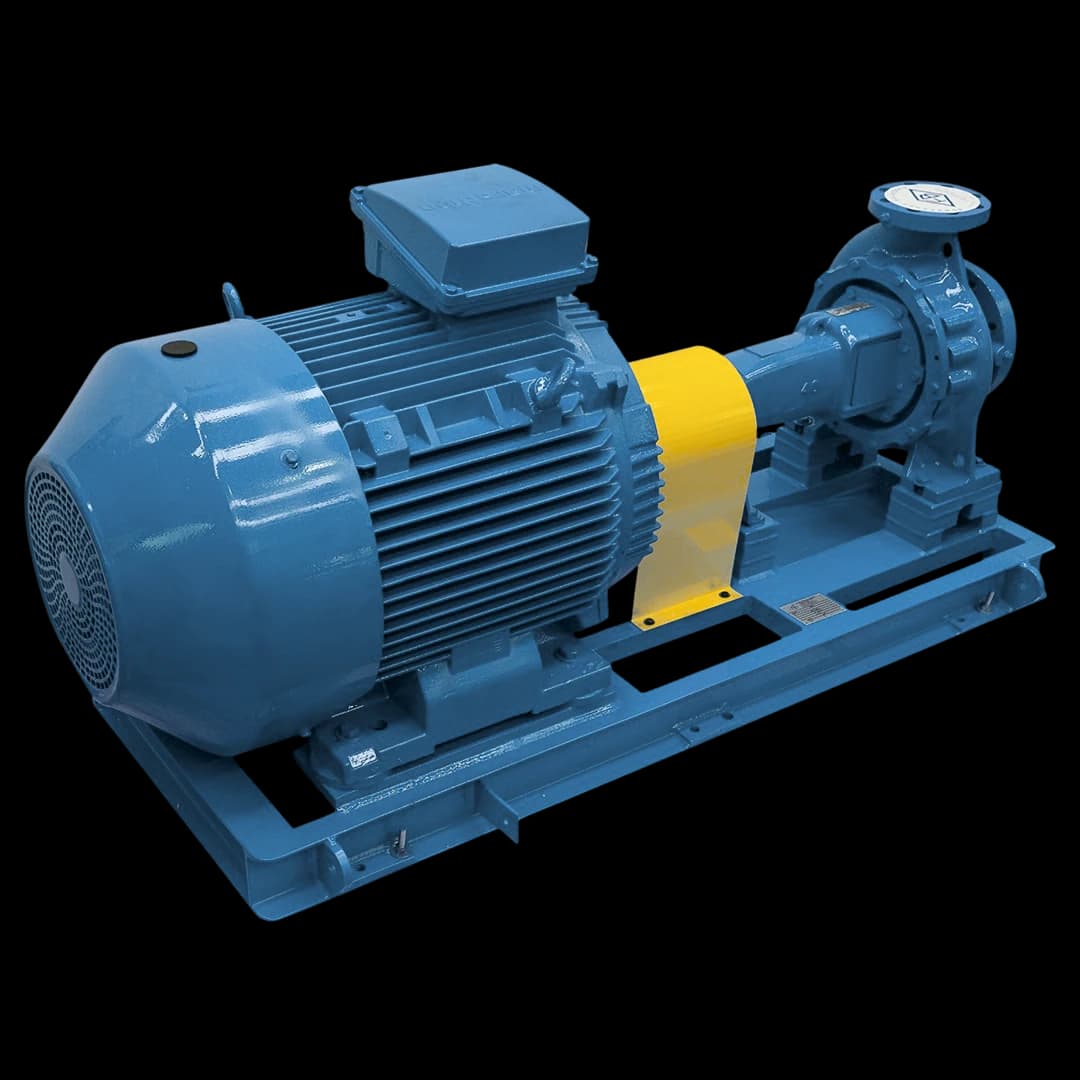
Centrifugal Pumps
Standardized centrifugal pumps for handling liquids in industrial processes.
- Flow up to 2,200 m³/h
- Head up to 135 m


FB Bombas factory · Cabreúva-SP, Brazil
We produce centrifugal pumps for water, industrial processes and fire fighting systems
FB Bombas, a Brazilian manufacturer that started its activities in 1944, produces centrifugal pumps at its factory in Cabreúva-SP. The FBCN series comprises 54 normalized centrifugal models, with flow up to 2,200 m³/h and head up to 135 m as range maxima (not simultaneous), back pull-out construction for maintenance without disconnecting the piping and mechanical construction per ASME B73.1, according to manual MTEC-03/00. It serves water transfer, chemical processes, pulp and paper, water/wastewater treatment (WTP/WWTP) and fire-fighting packages designed to NFPA 20 or ABNT NBR 16704, with in-house CNC machining, assembly and hydraulic test bench.
The limits quoted are series limits: they do not occur simultaneously and do not apply to every model. Model, materials and conditions are confirmed during technical selection.
FB Bombas operates a single factory in Cabreúva-SP, Brazil. This page covers the production category: Centrifugal pumps.
Select a photo to enlarge it.
Each family links to its models, dimensions and the series technical manual.
Standardized centrifugal pumps for handling liquids in industrial processes.
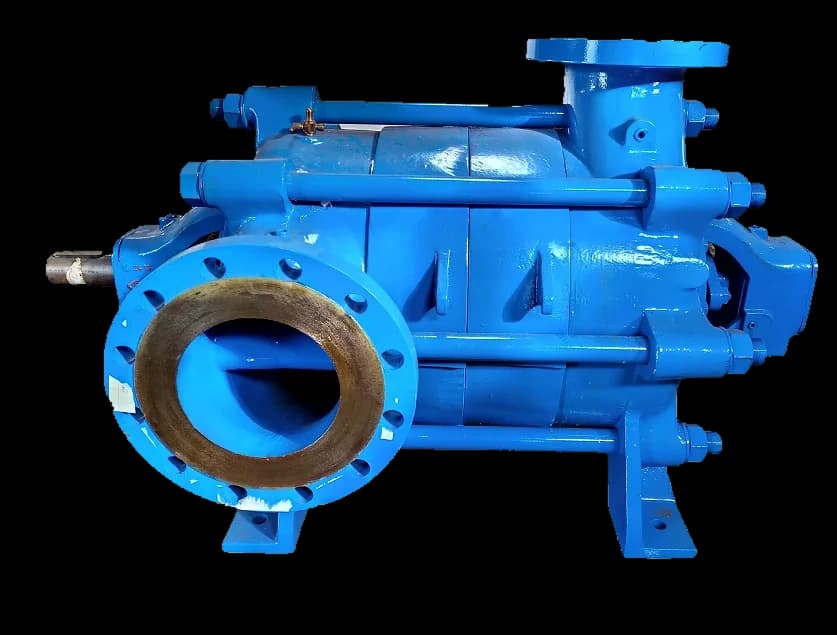
Horizontal multistage construction for applications requiring increased pressure.
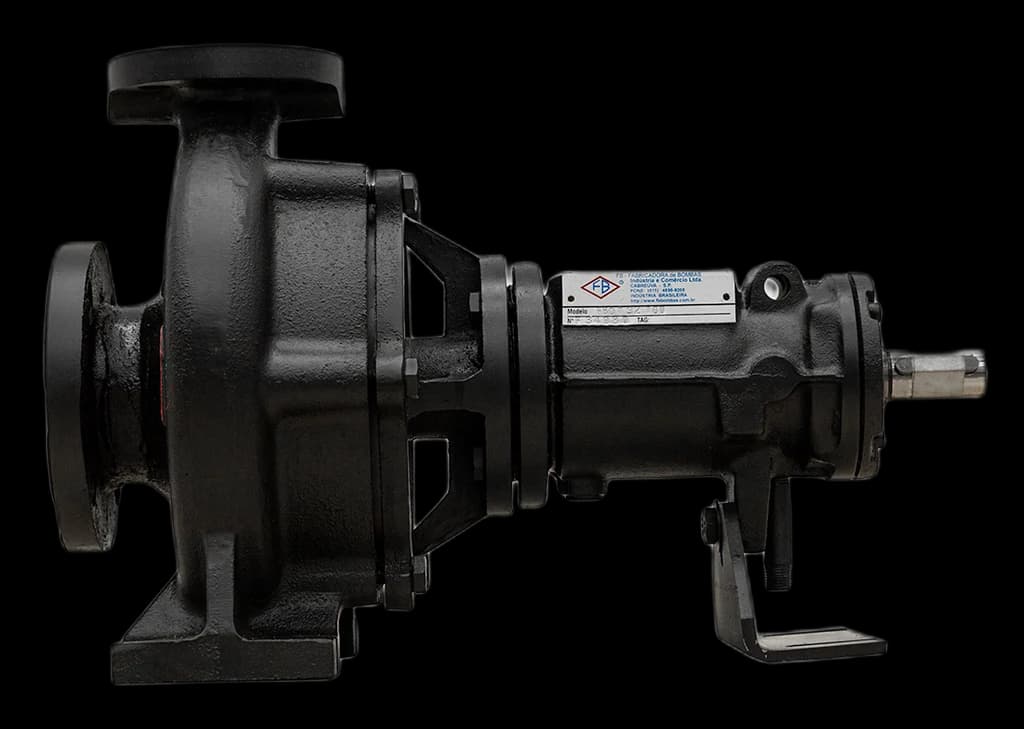
Thermal oil circulation in industrial heating systems.
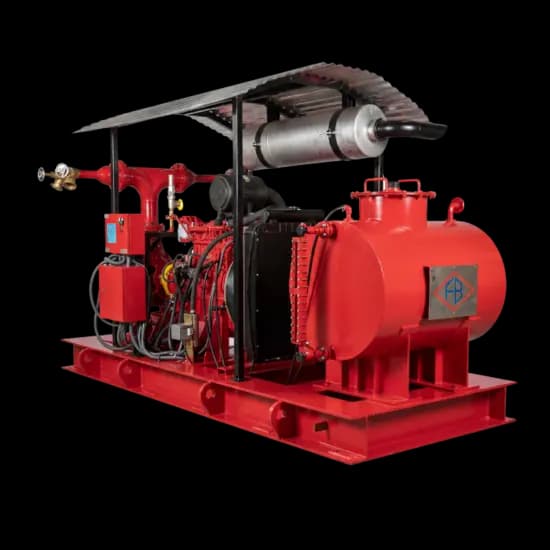
Diesel or electric pumping sets for fire protection systems.
Describe the fluid, flow rate and operating conditions. Engineering will recommend the series and model.
Values are independent series limits: they are not a simultaneous operating point and do not apply to every model.
Gather these details before contacting engineering. Partial information is enough to get started.
Catalogues and manuals identified by series and language. Catalogues complement the technical manuals.
Answers on manufacturing, selection and supply for this category.
It is a centrifugal pump built to standardized dimensions, which makes replacement and maintenance easier. On the FBCN, the external dimensions generally follow ISO 2858 and the mechanical construction follows ASME B73.1 (manual MTEC-03/00, p.1). Before replacing an installed pump, check the ports, baseplate and shaft end on the drawing.
Manual MTEC-03/00 indicates the FBCN for clean or turbid liquids in the chemical, petrochemical, pulp and paper, steel, mining, food, textile and pharmaceutical industries and in water and wastewater. The FBCN is also the main pump of the FBFS fire-fighting packages. For fluids with suspended solids, FB is consulted before selection.
Yes. FB Bombas manufactures fire-fighting packages with a centrifugal main pump, jockey and control panel, designed to NFPA 20 or ABNT NBR 16704 as the project requires. The demand of automatic sprinklers (ABNT NBR 10897) or hydrants (ABNT NBR 13714) comes from the system design; FB does not supply UL/FM-listed packages.
Efficiency varies with the model and duty point and is shown on each pump curve. On the curves of the ten large-capacity models, peak readings range from about 74% to 86%. Selection by duty point gives the expected efficiency for the application.
Yes, with material selection: manual MTEC-03/00 covers cast iron, ductile iron, carbon steel and stainless steel, each with a peripheral-speed limit. For corrosive fluids, engineering recommends the material according to fluid, temperature and concentration.
The required NPSH varies according to the model and operating flow. FBCN performance curves show the required NPSH used to size the installation.
Yes. FBCN curves show flow × head, efficiency, absorbed power and required NPSH by speed. They are published as PDFs, in Portuguese, at 1750 rpm (53 sheets) and at 3500 rpm (27 sheets, 25-150 to 100-200), and the curve for the selected duty point comes with the proposal.
Our technical team sizes the ideal pump for your flow and pressure
Materials, availability and lead time are confirmed in the technical-commercial proposal.
Other production categories, product lines, service areas and documentation.