These catalogues complement the technical manuals. For sizing and operating limits, consult the specific documentation and engineering team.
The right document, by pump series.
Check what each document covers before opening the file. The PDF technical manuals for FB industrial pumps and the online catalog are clearly identified below.
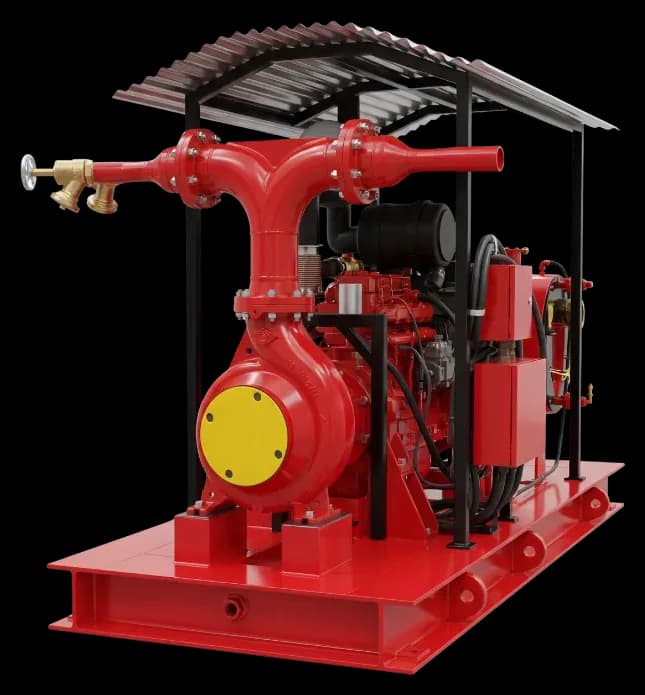
Online documentation for FBFS fire pump systems. Review electric, diesel and electric with diesel configurations and prepare your project information for a technical discussion.
See what each series document covers: operating data, applications, construction, sealing and materials. The model and configuration are confirmed with our team during selection.
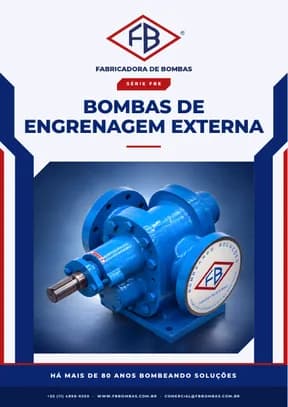
FBE · MTEC-01/01
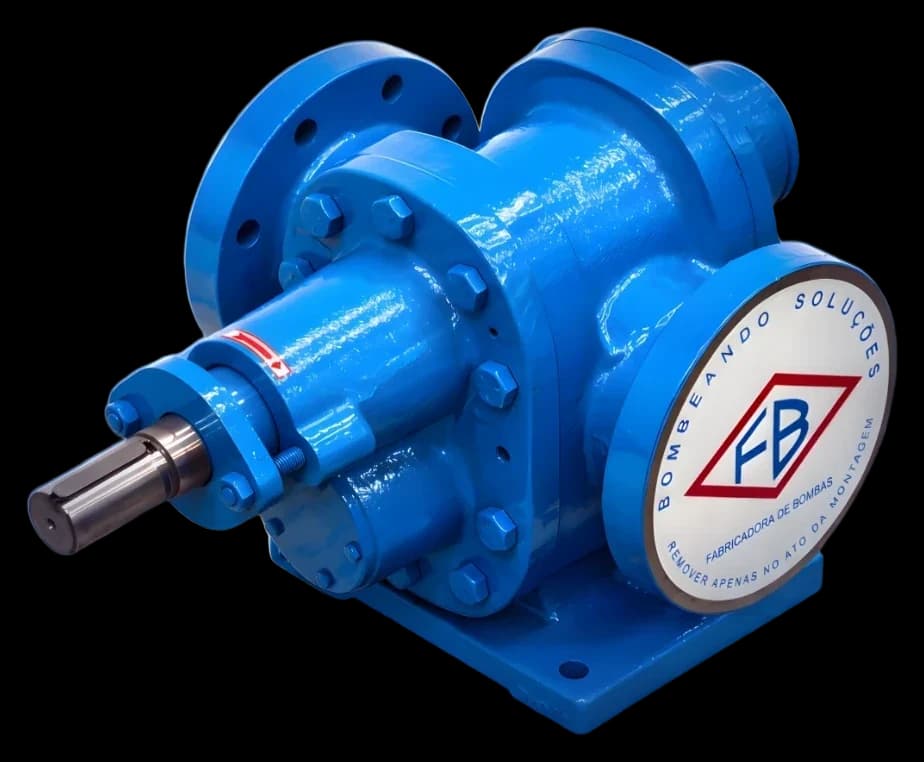
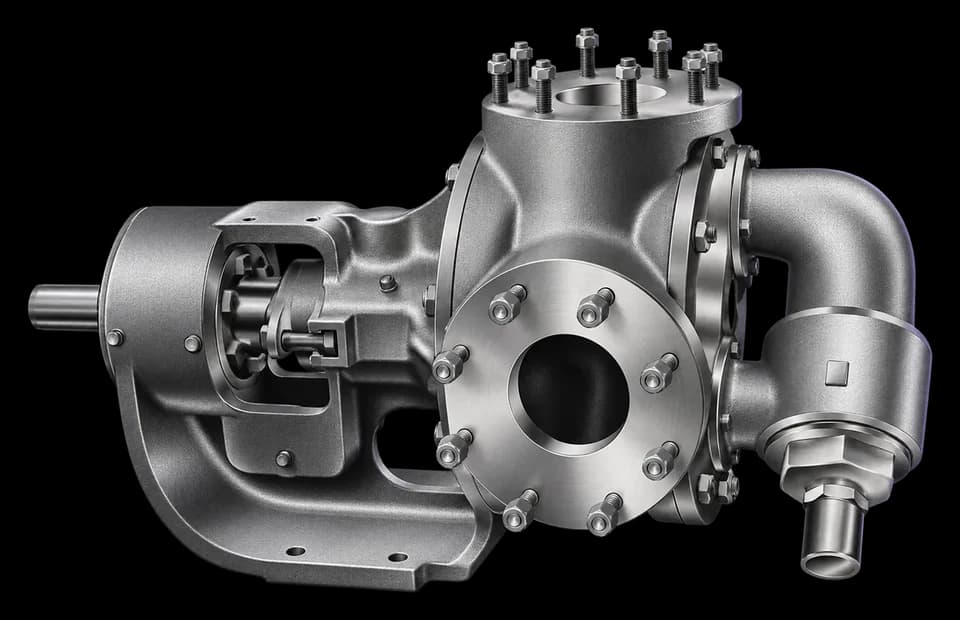
External Gear Pump
Operating data
Sizes
DN 1/8" to 6"
Flow
Up to 390 m³/h (MTEC-01/01, p.1)
Pressure / Head
Up to 220 m (MTEC-01/01, p.1)
Temperature
10 to 500 °C (2026 FBE catalogue, p.3)
Rotation
1,750 to 150 rpm depending on viscosity, with pulley or gearbox at low speeds (2026 FBE catalogue, p.5)
Typical applications
Chemical
Petrochemical
Pulp and paper
Steel
Mining
Food
Textile
Pharmaceutical
Sanitation
What's inside
Quick Selection Table
Technical Data
Accessories
Cutaway Drawing and Parts List
Auxiliary Connections
Dimensional
Construction
Body cast in single piece with integrated feet and ports opposed at 180°
Helical gears mounted one over the other — driver and driven
Shafts supported by bushings; rolling bearing only in the optional external bearing assembly
Sealing housed in the front region of the pump
Ports: internal BSP thread on FBE 1/8" to 1" and flanges on the casing on FBE 1.1/2" to 6"; per the FBE 2026 catalogue (p.6), flanges on FBE 1.1/2" to 10" are ANSI B16.5 150 lb
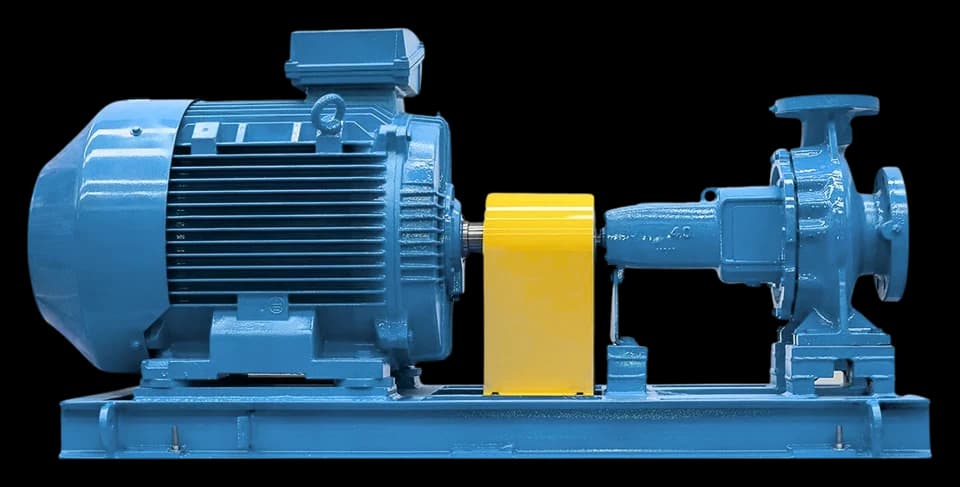
Accessories: electric or combustion motor, flexible coupling with or without spacer, coupling guard in carbon steel or anti-spark material, welded structural steel base or "U" profile plate, identification plate in aluminum or stainless steel
Sealing options
Gland packing — compressed by the gland follower and adjusted by a hex nut
Mechanical seal type 21 — ceramic × graphite × viton, AISI 304 spring
Lip seal — installed in a specially manufactured cover or casing
Magnetic coupling — special sealing where no leakage is allowed, with corrosive, toxic or explosive fluids
Available materials
Cast Iron (ASTM A48 CL30)
Ductile Iron (ASTM A536 60-40-18)
Carbon Steel (ASTM A216 WCB)
Stainless Steel (ASTM A743 CF8M)
Bronze (ASTM B584 C93700)
Who it's for
Process engineers, preventive maintenance teams and EPC designers specifying positive displacement pumps for viscous fluids.
When to use it
Read before specifying (to validate flow × viscosity × pressure × temperature), during installation (accessories, auxiliary connections and dimensions) and for maintenance (cutaway drawing and parts list).
Models from 1" to 4" (GG, HJ, HL, KK, LQ, LS, M, AS, AK, AL)
Typical applications
Viscous-liquid transfer, subject to selection
Heated processes, subject to configuration
Dimensional comparison for replacement
Maintenance and parts identification
What's inside
Introduction
Operating Principle
Equipment Identification
Parts List and Exploded View
Dimensional
Transport
Storage
Installation and Operation
Alignment
Construction
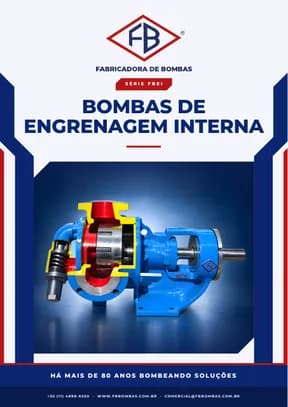
Internal-gear positive displacement; the manual identifies the rotor with shaft and internal gear
“Gear within a gear” principle: the teeth form a seal between suction and discharge (MAN001-10, p.6)
Relief valve subject to configuration; pumps without a relief valve require external overpressure protection
Jacket, where specified: steam up to 185 °C and/or 10 bar or thermal fluid up to 232 °C and/or 10 bar (MAN001-10, p.4); jacket-circuit limits, distinct from pumped-liquid limits
Weight from 9 kg (GG1 model · 1") to 272 kg (M4 model · 4") depending on size
40–80 mesh filter depending on model and the largest possible passage area; relief must not control pressure or flow
Sealing options
Mechanical seal with gland in the exploded-view construction
Packing with adjustable gland in the alternative construction
Available materials
Cast iron
Ductile iron
Carbon steel
Stainless steel — catalog options, as specified
Who it's for
Maintenance engineers, operators and technicians who need to identify parts, compare dimensions and check documentation for the supplied assembly.
When to use it
Use for drawings, alignment and spare-parts planning. Pages 5 and 13 contain conflicting startup instructions; request the confirmed procedure for your equipment from technical support. Do not follow an isolated PDF sequence.
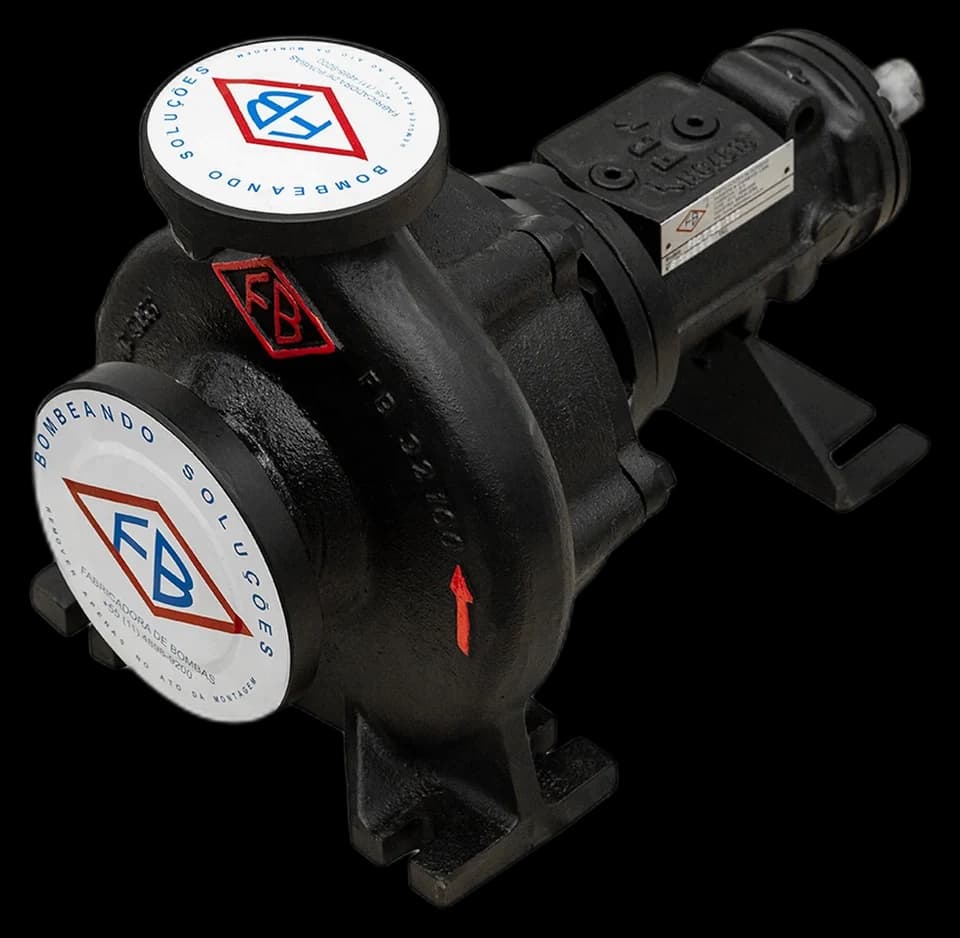
Spiral body cast in single piece, supported on its own feet, with wear ring on suction side
Radial single-suction impeller with wear ring on pressure side (except models 25-150, 32-125 and 32-125.1)
Shaft with protection sleeve in the sealing region
Back-pull-out construction — bearing is removed without dismantling piping
Flanges (Table 1, p.5): cast iron ANSI B16.1 125 Lb FF or 250 Lb FF, depending on size; steels and ductile iron ANSI B16.5/B16.42 150 Lb RF
Hydrostatic test pressure: per ASME B73.1
Sealing options
Packing: Table 3 on page 7 relates temperature and pressure for ANSI B16.1 125 and 250 lb flanges
Mechanical seal: Table 3 lists 90 °C and 10 bar; confirm the arrangement appropriate to the process conditions
Seal chamber and materials depend on the application; fluids with suspended solids require consultation with FB (section 2.3)
Available materials
Cast Iron (peripheral speed up to 40 m/s)
Ductile Iron (up to 60 m/s)
Carbon Steel (up to 60 m/s)
Stainless Steel (up to 80 m/s)
Who it's for
Process, maintenance and design engineers who need to consult FBCN construction, sealing arrangements, operating limits and dimensions.
When to use it
Read for sizing (flow × head tables, pressure × temperature limits), preventive maintenance planning and selection of sealing chamber appropriate to the fluid.
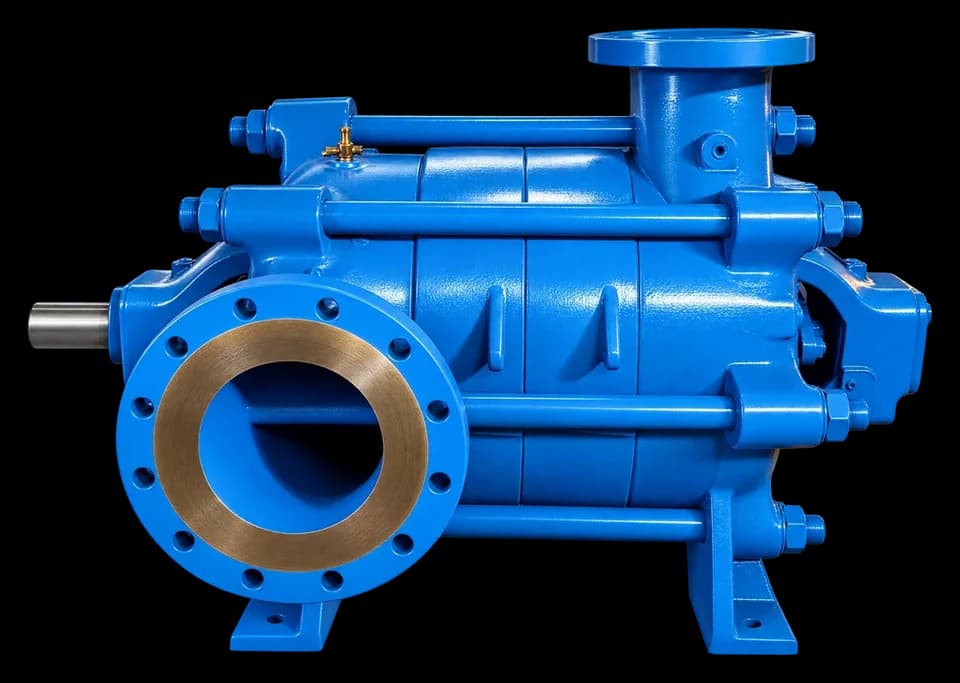
Axially assembled stage casings are held together by external tie rods and flat gaskets. Closed radial single-suction impellers work with diffusers. Configurations include packing or mechanical seals, with grease- or oil-lubricated bearings.
FBME 4/3 denotes a 4-inch discharge and three stages.
Sealing options
Uncooled packing: −10 to 105 °C.
Cooled packing: 105 to 140 °C.
Single mechanical seal without cooling: up to approximately 105 °C, depending on the seal manufacturer (Figure 3); 140 °C maximum in Table 1.
Available materials
Select materials with engineering for the liquid, temperature and configuration; consult the relevant parts list and drawing.
Who it's for
Engineering, maintenance and purchasing teams checking the documented FBME construction and limits.
When to use it
Use for selection and parts identification. Series maxima are not simultaneous: validate flow, head, stages, speed, sealing and materials for the duty point. Contact FB for suspended solids.
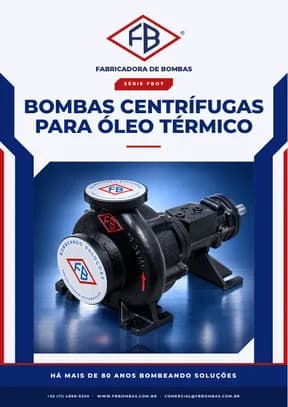
Bearing with dual rolling bearings — one submerged in oil, the other shielded and grease-lubricated
Flanges: ANSI B16.42 150 lbs (standard) or DIN EN 1092-2 PN16 (optional)
Hydrostatic test pressure: 1.5× operating pressure
Part numbering per DIN EN 24250 (Table 3)
Sealing options
Manual MTEC-16/00 (§2.3) describes graphite packing and a mechanical seal immersed in bearing housing oil
The current catalogue (p.2) describes the seal immersed in the thermal oil itself. Confirm the configuration and maintenance instructions with engineering before applying either description to the equipment.
Available materials
Cast Iron (up to 40 m/s)
Ductile Iron (up to 60 m/s)
Carbon Steel (up to 60 m/s)
Stainless Steel (up to 80 m/s)
Who it's for
Process engineers at plants with thermal-oil heating systems (pharmaceutical, chemical, textile, plastics) who need robust sealing for continuous high-temperature operation.
When to use it
Read during selection (characteristic curves at 1750 and 3500 rpm, maximum pressure vs temperature), during installation (auxiliary connections, ANSI B16.42 150 lbs flanges or DIN EN 1092-2 PN16) and for maintenance (DIN EN 24250 parts list).
Installations with hazardous-area requirements, subject to component assessment and documentation
What's inside
Electric Configuration: main pump + jockey + automatic control panel
Diesel Configuration: automatic-start engine + external fuel tank
Electric + diesel configuration: roles and controls defined by design
Standards applicable to the assembly, sprinklers and hydrants
Components and supply boundaries by configuration
Commercial, industrial and petrochemical applications for assessment
Testing and acceptance criteria specified in the contract
Technical documentation and engineering responsibilities
Inputs needed for assembly selection
Interfaces with installation and system approval
Construction
Main centrifugal pump driven by electric motor or diesel engine
Small-capacity jockey pump for network pressure maintenance
Controls and alarms defined by design and adopted standard
Pressure instruments and devices per selected configuration
Fuel tank selected for the diesel engine and required design autonomy
Starting, batteries and chargers per engine and controller documentation
Exhaust, cooling and ventilation per engine documentation and installation
Base, assembly, interfaces and site services per contracted scope
Sealing options
Sealing per selected pump and assembly requirements
Seal materials compatible with water and operating conditions
Special arrangements subject to assessment and proposal documentation
Available materials
Casing and impeller identified in the pump datasheet
Shaft and internal components per selected model
Piping and connections per design and water conditions
Base and finish defined in the supply scope
Who it's for
Fire protection designers, engineering, maintenance and procurement teams organizing the information needed to select and procure a pump assembly.
When to use it
Consult when preparing a specification or comparing configurations. Provide hydraulic demand, supply, installation and document requirements. Testing scope, Brazilian engineering responsibility registration (ART) and other responsibilities must be defined in the contract; the catalogue does not prove authority or insurer approval.
Quick answers to help you find and use the library files.
Where can I download an FB centrifugal pump manual?
This library holds the FB centrifugal pump manuals as PDFs: MTEC-03/00 for the FBCN series, a standardized centrifugal pump designed for clean or turbid liquids; MTEC-08/01 for the FBME series, a horizontal multistage centrifugal pump; and MTEC-16/00 for the FBOT series, a centrifugal pump for organic thermal oils. All three are in Portuguese and can be downloaded without registration.
Is there a gear pump catalog in PDF?
Yes. The library includes the FBE (external gear) and FBEI (internal gear) series catalogs. For technical detail, the FBE manual MTEC-01/01 covers the selection table, technical data, cutaway drawings, parts list and dimensions; the FBEI manual MAN001-10 covers the operating principle, parts, dimensions, installation, operation and alignment.
Which manual should I consult for my fluid?
Start with the series suited to the fluid. Viscous fluids: FBE (MTEC-01/01) and FBEI (MAN001-10), which the series catalog recommends for transferring high-viscosity liquids. Clean or turbid liquids: FBCN (MTEC-03/00) or, when the project calls for a multistage centrifugal pump, FBME (MTEC-08/01). Organic thermal oils without abrasive particles: FBOT (MTEC-16/00). Fire protection: the FBFS online catalog. The model and configuration are confirmed during selection, based on the operating conditions of your process.
Do I need to fill out a form to download?
No. Published PDFs can be downloaded directly from this page. Contacting the team is optional and remains available for equipment questions.
Are all PDFs available in three languages?
No. The PDFs available in this library are in Portuguese. The file language is identified next to the download action; translating the page does not change the document.
Where is the FBFS PDF?
The FBFS documentation in this library is an online catalog. Consult its document page and fire pump system configurations; no FBFS PDF is published here.
Need to relate the manual to your equipment?
Talk to our team about the series, model and topic you are reviewing. You can continue the analysis with the information you already have.