Series FBE
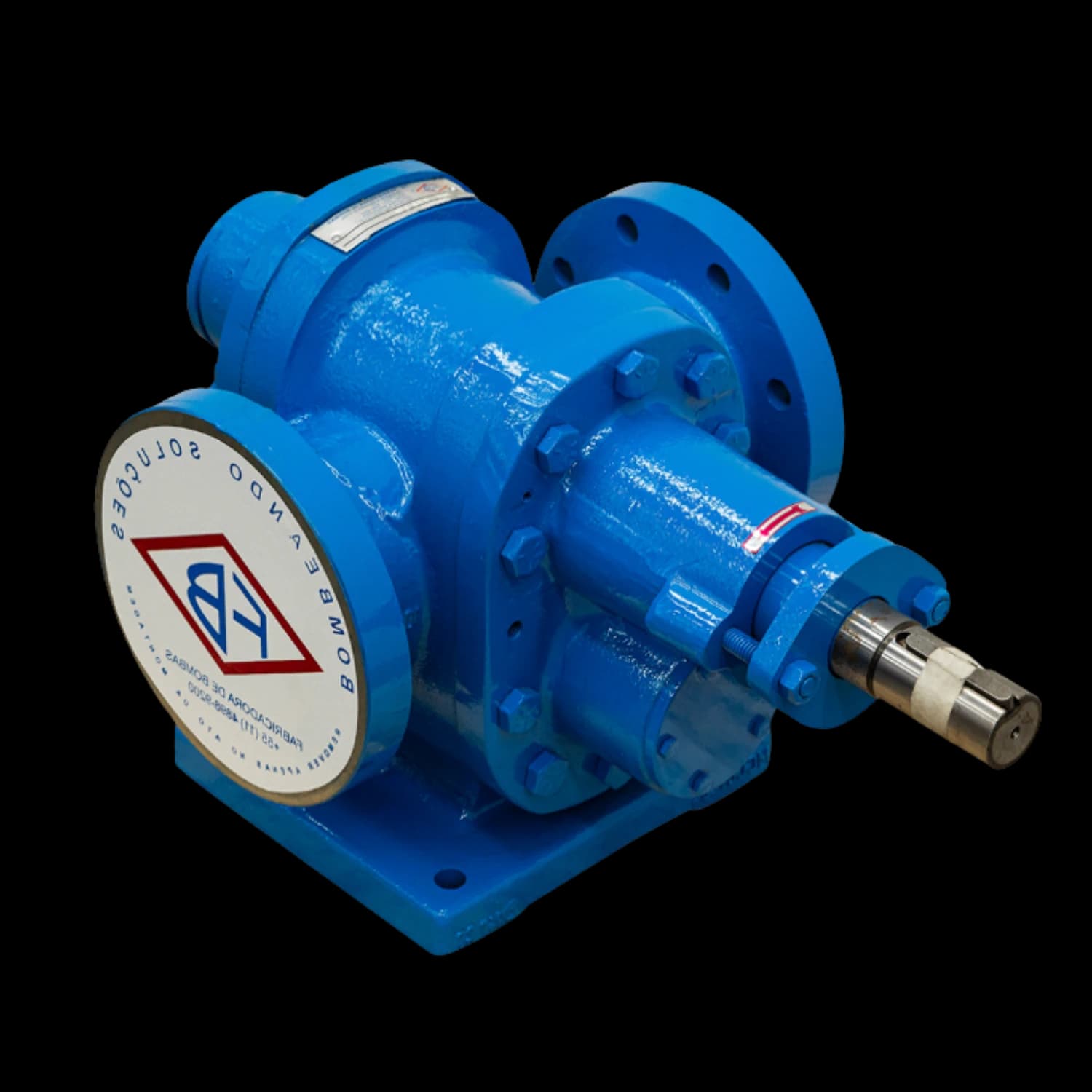
External Gear Pumps
In stock: 1/8″ to 4″
External gear pump for oils, asphalt and other viscous fluids, with curves, dimensions and a technical manual for each model.
- Connections
- 1/8″ to 6″
- Temperature
- 10 to 500 °C

FB Bombas factory · Cabreúva-SP, Brazil
FB Bombas manufactures in Cabreúva-SP, Brazil, the FBE external gear pump, 1/8″ to 6″ and up to 100,000 SSU, and the FBEI internal gear pump, up to 140,000 cP, for viscous fluids such as oils, resins, fuels, molasses, asphalt binder and bitumen; FBE 1/8″ to 4″ in stock (FBE and FBEI 2026 catalogs).

FB Bombas specializes in manufacturing external gear pumps, known as positive displacement pumps. Our FBE series is designed for transfer of viscous fluids such as asphalt, lubricating oils, molasses and chemicals.
Temperature from 10 to 500 °C in the 2026 FBE catalogue (configuration, materials and sealing define the applicable limit) and viscosity up to 100,000 SSU in the 3″ to 6″ sizes (limit per size).
The limits quoted are series limits: they do not occur simultaneously and do not apply to every model. Model, materials and conditions are confirmed during technical selection.
FB Bombas operates a single factory in Cabreúva-SP, Brazil. It produces this category: External and internal gear pumps.
Select a photo to enlarge it.
Each family links to its models, dimensions and the series technical manual.
Series FBE
In stock: 1/8″ to 4″
External gear pump for oils, asphalt and other viscous fluids, with curves, dimensions and a technical manual for each model.
Series FBEI
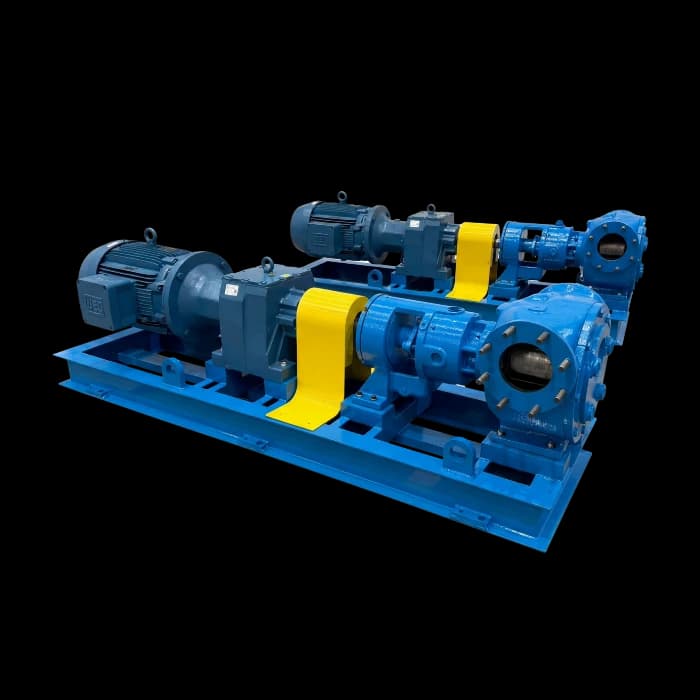
Internal gear pump for transferring viscous fluids at constant flow. Compare models, dimensions and documentation.
Describe the fluid, flow rate and operating conditions. Engineering will recommend the series and model.
Series limits, each under its own conditions: they are not one duty point and do not apply to every model.
Gather these details before contacting engineering. Partial information is enough to get started.
Catalogues and manuals identified by series and language. Catalogues complement the technical manuals.
Answers on manufacturing, selection and supply for this category.
FB Bombas, a Brazilian manufacturer that started its activities in 1944, produces at its factory in Cabreúva, São Paulo, with engineering, CNC machining and assembly on the same site.
It manufactures the FBE series (external gear, 1/8" to 6" in the manual; the 2026 catalogue also lists the 10" on p.6; larger models made to order) and the FBEI series (internal gear), documented in technical manuals MTEC-01/01 and MAN001-10 and in the 2026 catalogues — with spare parts and technical support direct from the factory.
An external gear pump uses two gears rotating in opposite directions to create suction and pressurize the fluid. It suits viscous fluids: theoretical flow is proportional to speed, and higher viscosity reduces internal slip and raises volumetric efficiency (Hydraulic Institute).
FBE pumps are used for transfer of asphalt, lubricating oils, vegetable oils, molasses, resins, paints, varnishes and other viscous fluids up to 100,000 SSU (limit per size: 100,000 SSU in the 3″ to 6″ sizes).
Yes, in the 1.1/2" to 6" sizes: the heating jacket (CA) is optional and keeps the fluid at the right temperature — essential for products like asphalt, which solidify at room temperature. The 1/8" to 1" models have no heating jacket.
A gear pump is positive displacement: theoretical flow is proportional to speed, and pressure and viscosity change the delivered flow through internal slip (Hydraulic Institute). A centrifugal has variable flow and is more efficient for low viscosity fluids like water.
FBE pumps can work with fluids up to 100,000 SSU viscosity in the 3″ to 6″ sizes — the limit is per size (Table 2, MTEC-01/01: 2,500 SSU at 1/8″–1/4″, 7,500 SSU at 3/8″–1″, 50,000 SSU at 1.1/2″–2″). For extremely high viscosities, we recommend a heating jacket to facilitate flow.
Gears in SAE 1045 (standard) or SAE 8640 steel, AISI 316L stainless steel or SAE J462 bronze, per Table 6 (MTEC-01/01), with the stainless steel updated from the 2026 catalogue; the 2026 catalogue lists SAE 1045 steel or AISI 316L stainless, with special treatments on request. The choice depends on the pumped fluid and operating temperature.
The smaller models (1/8" to 1/2") can be selected for dosing additives, dyes and other products that need controlled flow; repeatability depends on speed, pressure and viscosity, checked during selection.
Send fluid, viscosity, temperature, flow and differential pressure. Engineering assesses the gear pump series; the proposal specifies size, speed and sealing.
Materials, availability and lead time are confirmed in the technical-commercial proposal.
After the gear pump factory, compare the external and internal series, open the guides by application and request a quote.