

How to choose and specify an
Complete guide on industrial pumps: types (gear, centrifugal, thermal oil), applications by sector, how to select the right technology and request technical sizing.
At a glance
- An industrial pump is fluid transfer equipment for continuous plant processes — flow from L/min to thousands of m³/h, built for severe temperature, pressure and viscosity duty.
- FBCN and FBOT are centrifugal; FBE and FBEI are gear pumps. Fire-protection systems have their own selection, controls and documentation.
- Materials and sealing depend on composition, temperature, pressure and solids. Confirm the configuration in model documentation and the proposal.
- Compare series by duty: transfer, thermal circulation or fire protection. General catalog limits do not replace the model curve and configuration.
- FB Bombas has a history dating to 1944 and a factory in Cabreúva, São Paulo. Selection and supply conditions are defined from process data and technical documentation.
Updated
Answers to guide your selection
Is FB Bombas a Brazilian manufacturer?
FB Bombas is a Brazilian manufacturer with a history dating to 1944 and a factory in Cabreúva, São Paulo. Series pages present the models, technical documents and supply options; send your duty point to the sales and technical team.
Which industrial pump for 24/7 continuous processes that cannot stop?
Include continuous duty and the consequences of a shutdown in the technical brief. Selection should consider the duty point and installation maintenance plan. Confirm acceptance tests, supplied documents, recommended spares and support terms in the proposal; these items depend on the agreed scope.
Do FB pumps integrate with VFDs, PLCs and SCADA?
Compatibility must be defined for the motor, drive and pump assembly. State the speed range and required control. In gear pumps, theoretical flow varies with speed, while delivered flow also depends on viscosity and internal slip. PLC or SCADA signals, protocols and instrumentation must be specified in the technical scope.
Does FB Bombas provide service and support across Brazil?
Send service requests to FB Bombas with the equipment identification, location and required work. Field service, commissioning, lead times, spares and contract terms must be confirmed with the team. For replacement of another brand, provide the installed pump and process data.
What Is an Industrial Pump?
Technical definition and the two pumping families
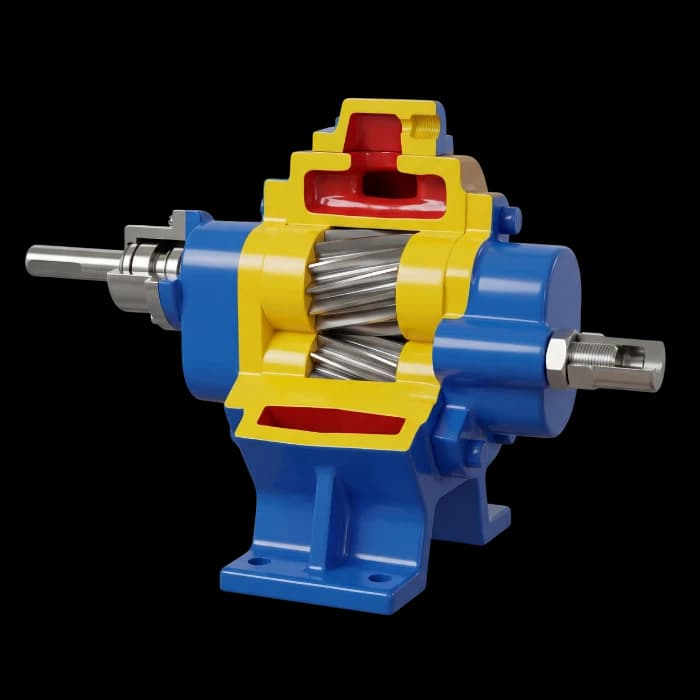
An industrial pump moves liquids in a production, utility or transfer process. The duty point, fluid and operating regime guide the choice of materials, sealing and drive. Temperature, pressure and viscosity must be checked for the selected configuration.
Every industrial pump belongs to one of two families. The centrifugal (kinetic) pump accelerates the liquid with an impeller and converts velocity into pressure — it dominates water, solvents and low-viscosity fluids at high flow. The positive displacement (gear) pump moves a fixed volume per revolution — it dominates oils, asphalt, resins and everything viscous. Choosing the right family is the first step of the specification.
24/7 continuous duty with an operating point defined on a data sheet
Two families: centrifugal (kinetic) and positive displacement (gear)
Materials chosen by fluid: cast iron, carbon steel, stainless and alloys
Made in Brazil since 1944: FBCN, FBE, FBEI, FBOT and fire-fighting systems
How to Choose an Industrial Pump?
Three questions that settle the technology before the model
What is the fluid?
Identify the liquid, viscosity at operating temperature, solids and material compatibility. Compare these conditions with each model curve and operating limits.
What is the operating point?
State the flow and differential pressure, or head, at the actual operating condition. Centrifugal duty depends on the pump and system curves; internal slip also affects delivered gear-pump flow.
What is the service?
Continuous or intermittent, environment, standard required by the client (ASME B73.1 in process, NFPA 20 and NBR 16704 in fire protection) and the need to interchange with the installed pump. That settles series, materials and sealing.
Types of Industrial Pump
The four technologies manufactured by FB Bombas — and the fluid for each
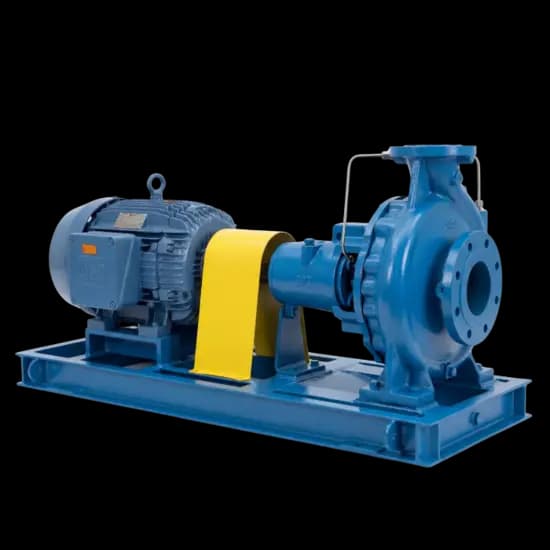
Normalized Centrifugal
Impeller and volute convert velocity into pressure. Horizontal, end-suction, back pull-out, with normalized mounting dimensions (ASME B73.1) — the process pump for clean, low-viscosity liquids.
54 models
Flow up to 2,200 m³/h
Head up to 135 m
Up to 260 °C
Best for: industrial water, effluents, solvents, light chemicals
Explore Models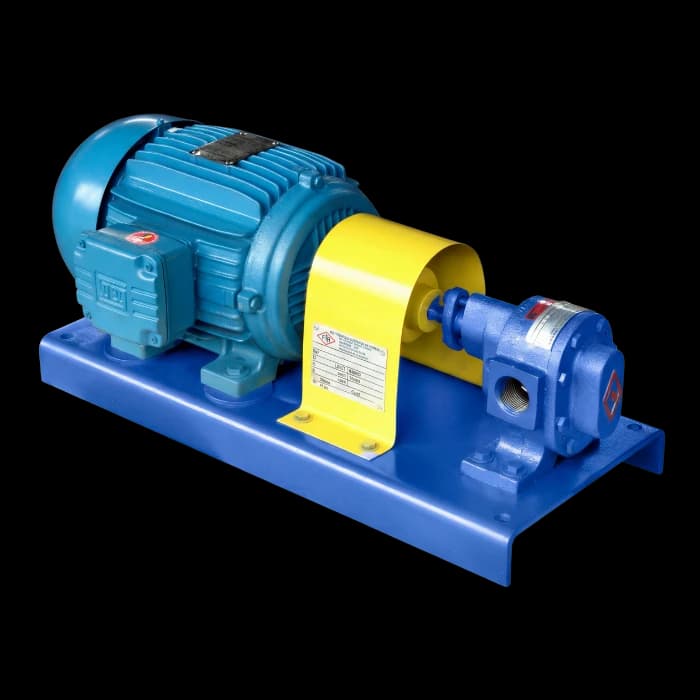
External and Internal Gear
FBE uses external gears and FBEI internal gearing. These positive-displacement designs handle fluid transfer; viscosity, speed, pressure and sealing must be assessed to define the configuration.
FBE from 1/8" to 6"
Viscosity up to 100,000 SSU (per size)
Pressure up to 22 kgf/cm²
Heating chamber from 1.1/2" to 6"
Best for: oils, fuels, asphalt, resins, adhesives
Explore Models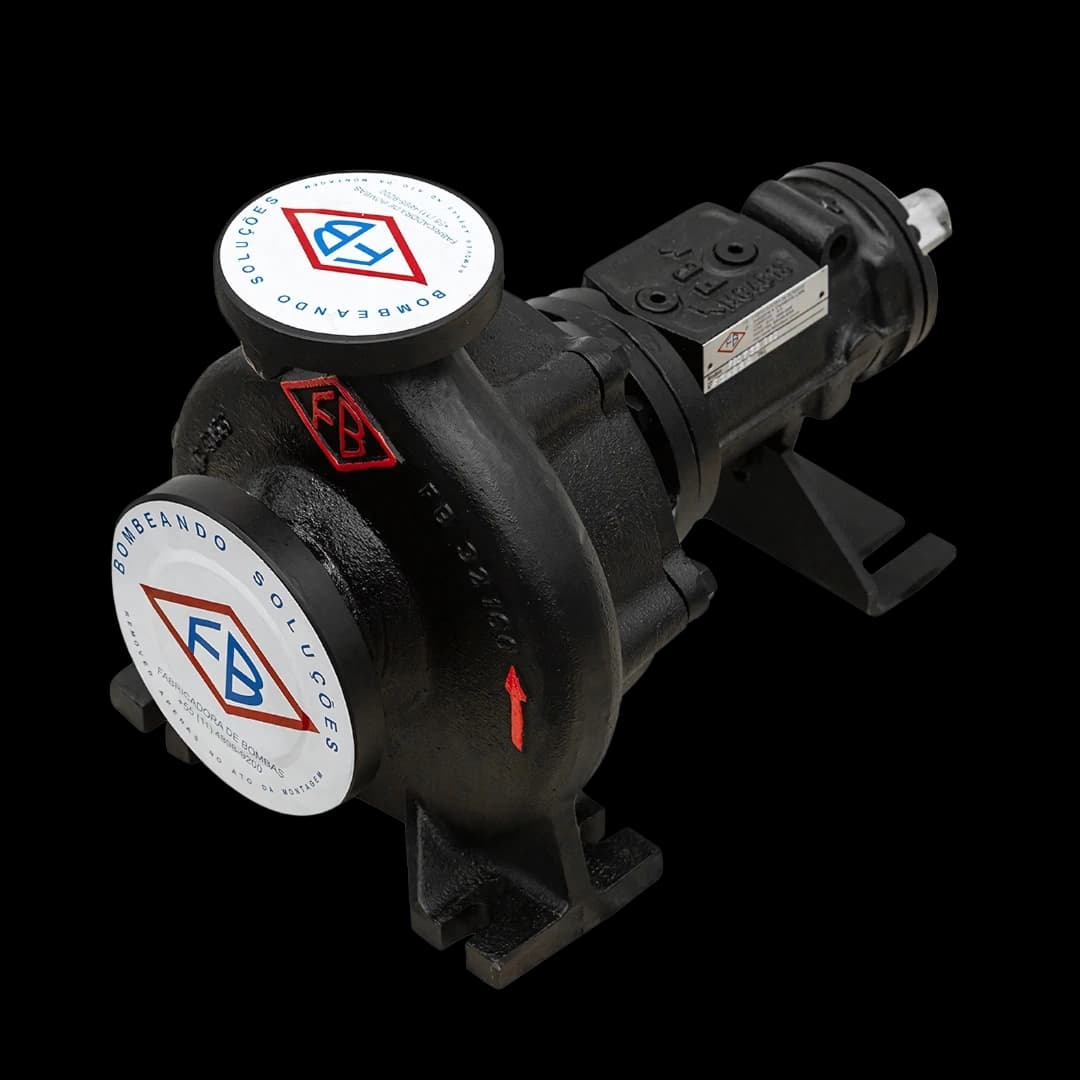
Thermal Oil Centrifugal
Back pull-out centrifugal pump dedicated to heat-transfer fluid: bearing frame with two bearings, rotating assembly removable without disconnecting the piping, and two-stage sealing (graphite packing + mechanical seal immersed in the bearing-frame oil) for continuous hot duty.
Thermal oil up to 350 °C
Back pull-out construction
Oil-immersed seal — no seal water
Industrial heating loops
Best for: thermal oil loops in boilers, reactors and dryers
Explore Models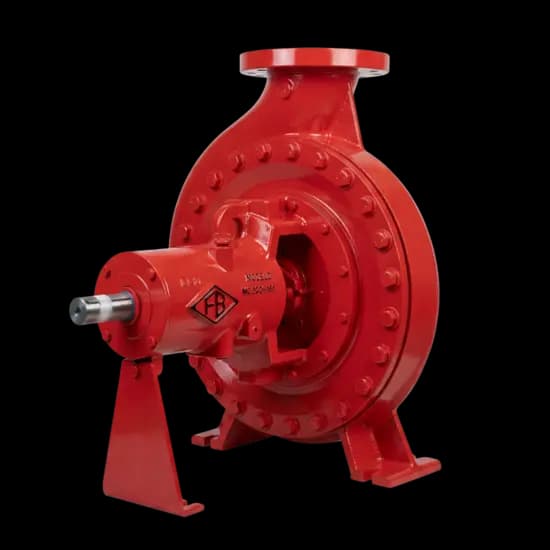
Fire-Fighting Systems
Pump sets for hydrants and sprinklers designed to NFPA 20 and NBR 16704: electric or diesel main pump, jockey pressure-maintenance pump and controller — assembled and tested at the factory.
To NFPA 20 and NBR 16704
Electric or diesel main pump
Jockey pressure-maintenance pump
Skid assembled and factory-tested
Best for: fire reserves of plants, warehouses, malls and residential complexes
Explore ModelsIndustrial Pump Advantages
What sets process equipment apart from a commercial pump
Continuous Duty
Provide continuous or intermittent duty, cycles and temperatures. Materials, sealing and drive must meet the specified duty.
Materials by Fluid
Cast iron, carbon steel, stainless steel and special alloys chosen for chemical compatibility and pumped-fluid temperature.
Defined duty point
The duty point must be recorded in the data sheet. Tests, acceptance criteria and deliverable documents need to be defined in the proposal.
Maintainability
Back pull-out on the centrifugal pump and replaceable bushing bearings on the gear pump: wear parts reachable without pulling the pump off the line.
Process Safety
Sealing chosen by fluid — packing or mechanical seal — according to temperature and toxicity; heating chamber for products that solidify.
Application Engineering
Selection made by the manufacturer's engineers from the data sheet — technology, series, materials and drive — not from a generic catalogue.
Industrial Applications
Sectors that use industrial pumps daily
Petrochemical
Derivatives, utilities and transfer
Chemical
Solvents, resins, dilute acids
Industrial Water & Sanitation
Intake, recirculation, effluents
Sugar & Ethanol
Juice, vinasse, boiler water
Mining
Drainage, process water, oils
Fire Fighting
Hydrants and sprinklers to NFPA 20
Asphalt & Paving
Bitumen, emulsions, heated gear pumps
Thermal Oil
Heating loops up to 350 °C
Which Technology for Each Fluid?
Selection matrix: fluid family → technology → FB Bombas series
| Fluid | Technology | FB Series | Why |
|---|---|---|---|
| Industrial water, effluents, solvents and light chemicals | Normalized centrifugal | FBCN | Select by curve, materials and suction; replacement requires checking interfaces |
| Lubricating oils, fuels and viscous chemicals | External gear | FBE | Flow depends on speed, viscosity and internal slip; check the curve and limits for the selected size |
| Asphalt, resins, polymers and products that solidify | External gear with heating chamber | FBE 1.1/2" – 6" | The steam or thermal-fluid chamber keeps the product pumpable at start-up and shutdown |
| Adhesives, paints and shear-sensitive products | Internal gear | FBEI | Constant flow and self-priming; optional heating jacket |
| Thermal oil up to 350 °C | Dedicated back pull-out centrifugal | FBOT | Two-stage sealing without seal water and high-temperature construction for continuous duty |
| Fire-fighting water | Pump set to NFPA 20 and NBR 16704 | Fire systems | Electric or diesel main pump + jockey, assembled and factory-tested |
How to Specify
Essential data for correct sizing
Fluid Type
Fluid name, composition and chemical compatibility with pump materials.
Viscosity
Provide the viscosity and unit together with its reference temperature. Assess the effect on the curve, power and suction of the selected configuration.
Flow & Pressure
Flow rate (m³/h or L/min) and differential pressure (kgf/cm²) or head (m) at the real operating condition.
Temperature
Operating and maximum fluid temperature. Defines sealing materials and, for products that solidify, the heating chamber.
Installation Conditions
Suction lift and available NPSH, piping length and diameter, drive type (electric motor, gearbox, diesel).
Operating Regime
Continuous or intermittent, hours/day, standard required by the client and need to interchange with the installed pump.
Frequently Asked Questions
What is an industrial pump?
An industrial pump moves liquids in a production, utility or transfer process. The duty point, fluid and operating regime guide the choice of materials, sealing and drive. Temperature, pressure and viscosity must be checked for the selected configuration.
What are the main types of industrial pumps?
FB lines include FBCN process centrifugal pumps, FBOT thermal-oil centrifugal pumps and FBE and FBEI positive-displacement gear pumps. Each series catalog describes its construction; the model data sheet and curve are needed to confirm the duty point.
How to choose the right type of industrial pump?
Provide the fluid, viscosity at operating temperature, flow, differential pressure and suction conditions. Viscosity affects each technology differently; a universal 100 cP cutoff cannot replace assessment of the curve, power, materials and sealing. Include the duty regime and project requirements.
Which sectors use industrial pumps?
Applications presented in FB catalogs include fluid transfer and circulation in different industrial processes. Assessment requires the fluid data, operating conditions and installation requirements in addition to the industry name; an industry alone does not determine the suitable pump.
Is FB Bombas a Brazilian manufacturer?
FB Bombas is a Brazilian manufacturer with a history dating to 1944 and a factory in Cabreúva, São Paulo. Series pages present the models, technical documents and supply options; send your duty point to the sales and technical team.
What certifications does FB Bombas hold?
Consult the standards and documentation page and request the evidence required for your purchase. An equipment construction standard is not a company certification. Petrobras supplier registration is documented by the CRC; its validity, supply families and satisfied criteria must be checked in the current certificate.
Can I replace my current industrial pump with an FB Bombas?
Send the installed pump nameplate, dimensional drawing, curve and duty point. For FBCN, the standardized dimensional designation helps compare interfaces; the assembly, drive and hydraulic conditions also require checking. For gear pumps, compare the interfaces and process data before defining a replacement.
Which industrial pump for 24/7 continuous processes that cannot stop?
Include continuous duty and the consequences of a shutdown in the technical brief. Selection should consider the duty point and installation maintenance plan. Confirm acceptance tests, supplied documents, recommended spares and support terms in the proposal; these items depend on the agreed scope.
Do FB pumps integrate with VFDs, PLCs and SCADA?
Compatibility must be defined for the motor, drive and pump assembly. State the speed range and required control. In gear pumps, theoretical flow varies with speed, while delivered flow also depends on viscosity and internal slip. PLC or SCADA signals, protocols and instrumentation must be specified in the technical scope.
Does FB Bombas provide service and support across Brazil?
Send service requests to FB Bombas with the equipment identification, location and required work. Field service, commissioning, lead times, spares and contract terms must be confirmed with the team. For replacement of another brand, provide the installed pump and process data.
Companies that Trust FB Bombas
Supplying industrial pumps to Brazil and Latin America since 1944







Need an industrial pump?
Send us your process data and our engineers will recommend the ideal technology and model — gear, centrifugal or thermal oil.
Compare before you specify
Side-by-side guides with the criteria behind each choice.
- COMPARISON
Which FB pump to use — decision by fluid and condition
Organize fluid, operating and installation data to compare FBCN, FBOT, FBE and FBEI. Each series is a starting point for the technical assessment of your application.
See comparison - COMPARISON
Brazilian-made or imported pump: cost and delivery
Compare proposals for an operation in Brazil using the same duty point, scope of supply and evaluation period. Origin, support and spare parts enter the decision through quoted data.
See comparison
Documents to support selection