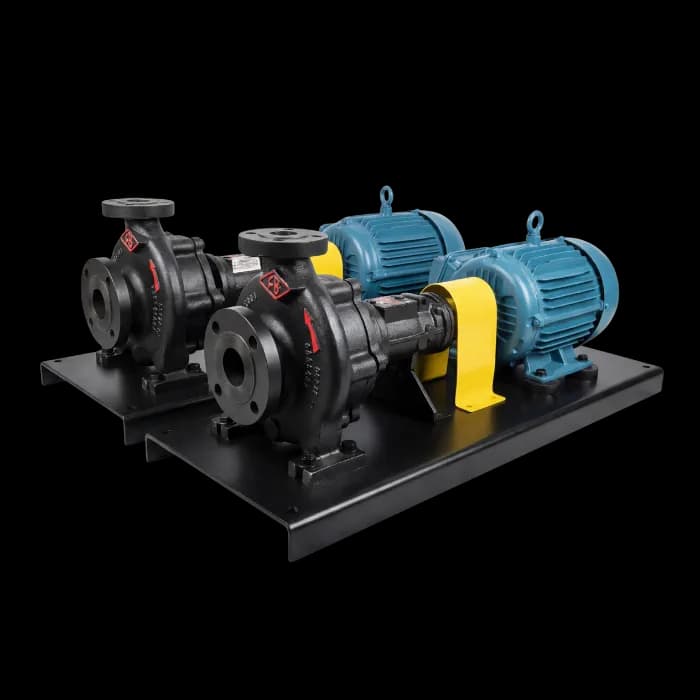
Custom Complete Motor-Pump Assembly
Pump, motor, coupling and baseplate specified as one assembly for your installation.
Explore the scope

Skids, mobile units, motor-pump assemblies and special projects. Explore a supply format for your installation and discuss the process conditions with our engineering team.
Start with what you need supplied: a complete assembly, mobility, integration, replacement or materials specified for the fluid.
Pump, motor, coupling and baseplate specified as one assembly for your installation.
Explore the scope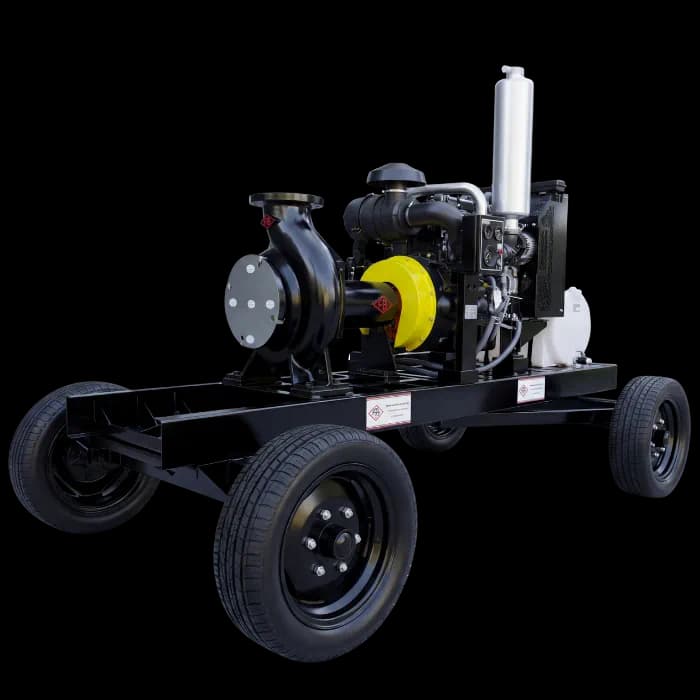
Pumping on a mobile base, with drive and assembly specified for field operation.
Explore the scope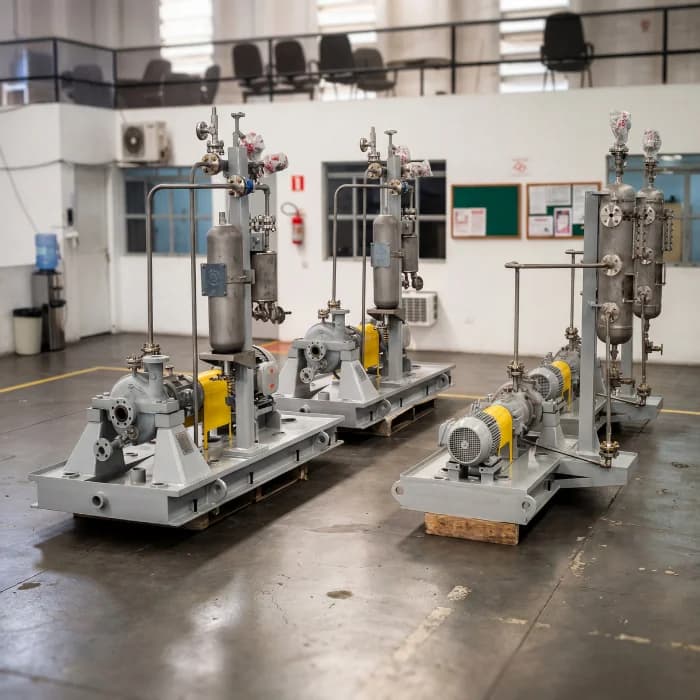
Pumps, piping and components integrated on a base, with supply boundaries defined for the project.
Explore the scope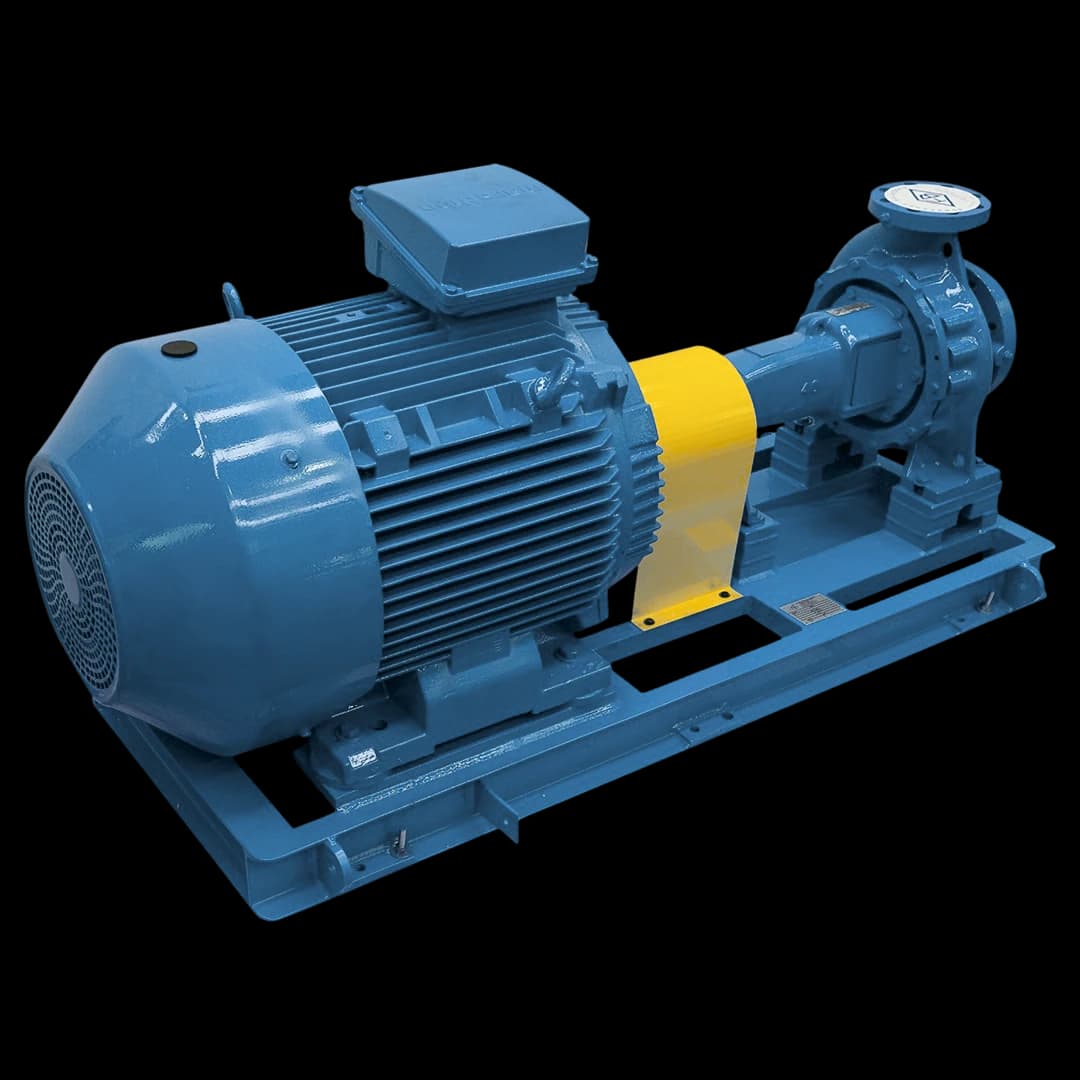
A new FB pump for an existing installation, with duty-point and interface assessment.
Explore the scope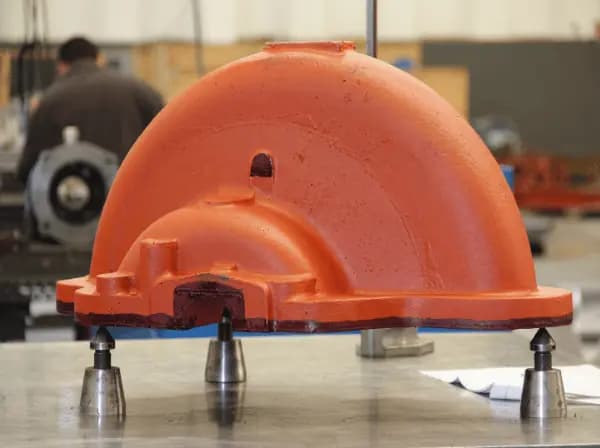
Materials specified from the fluid, operating conditions and supply requirements.
Explore the scopeEach industry has its own operating conditions. These pages help you prepare an enquiry for a custom supply.
Custom supply for transfer and circulation of chemical and petrochemical process fluids.
Explore the scopePumping assemblies and integration specified for the fluid and stage of sugar and ethanol production.
Explore the scopeCustom assemblies for process water, clarified effluent, cooling and utilities.
Explore the scopeAssessment of pumping assemblies for process services, industrial water and thermal systems.
Explore the scopeSee how hydraulic analysis, material selection and testing contribute to defining the project.
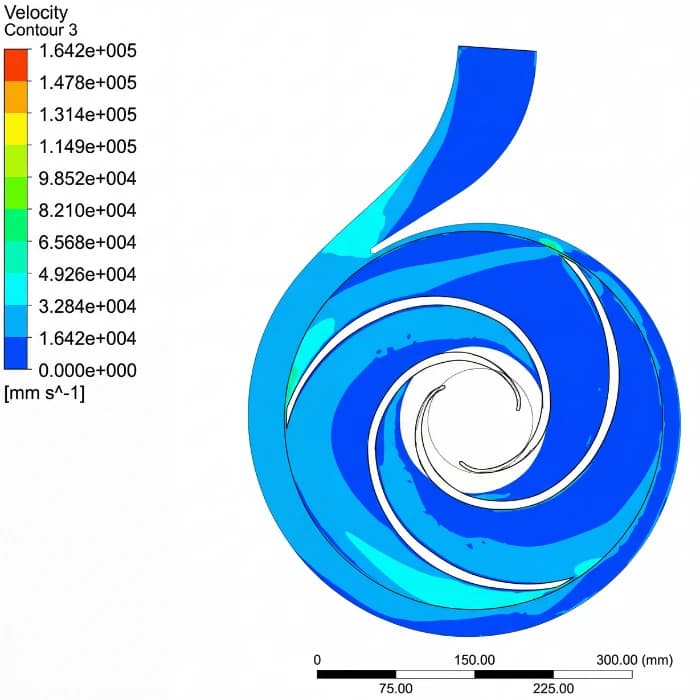
Flow analysis to support engineering decisions in custom pumping projects.
Explore the scopeFluid composition and operating duty guide the assessment of pump materials.
Explore the scope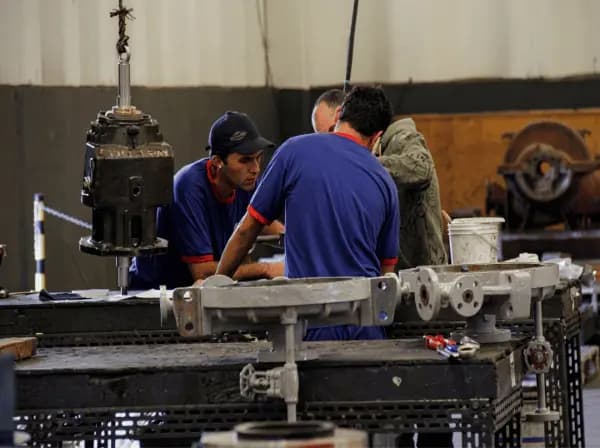
In-house bench tests to verify the pump against the scope and criteria defined for the project.
Explore the scopeEvery project starts with the process data and goes through briefing, design, manufacturing, testing and shipping.
Before any drawing, engineering confirms the fluid (composition, viscosity at operating temperature, solids and abrasiveness), the duty point (flow, pressure and NPSH available), mechanical and electrical interfaces (flanges, voltage, frequency and area classification) and what the assembly must deliver in the field (duty, starts per hour and planned maintenance).
The format follows the operation: a skid where space is available and demand is continuous; a retrofit where the installation already has a foundation and piping; a mobile unit where the work moves between sites, such as emergency transfer, dewatering or line flushing.
Tests for a custom solution are part of the inspection and test plan agreed in the proposal. The protocol is the same as for the standard series: a performance curve measured on the factory test bench and a hydrostatic test at the pressure set by the standard or the base-series manual. When the scope includes the report, the customer receives the measured curve, not only the nominal one.
API 610 is the standard for centrifugal pumps in the petroleum, petrochemical and natural gas industries. At FB Bombas it applies as an engineered-to-order project requirement: engineering reviews the order requirement by requirement (materials, sealing per API 682, seal plans and witnessed tests) and records in the design memorandum what is fully met and what is met by an equivalent alternative, for the customer to decide.
Start with the information you already have. You can enquire without every technical detail; the team will guide the next steps.
Answers to help prepare your enquiry and understand the supply.
A motor-pump assembly combines a pump and drive on a baseplate. A skid integrates components specified for the process, such as piping, instruments and controls. A mobile unit uses a wheeled base for operation at different locations. The format depends on the installation and required supply.
In this range, retrofit means supplying a new FB pump for an existing installation. The assessment considers the duty point and interfaces. Keeping the baseplate and piping depends on dimensional verification; it is not automatic.
Yes. FB builds mobile units on a cart, with a diesel or electric motor, for emergency use, dewatering, temporary transfer and field work. The unit combines the pump (usually FBCN or FBE, depending on the application), the drive, the wheeled base and, where specified, the starter panel. Application engineering validates the configuration case by case.
Yes, when specified. A skid can combine duty and standby pumps, an electric or diesel motor, a welded structural base, piping, valves, pressure gauges, pressure and temperature sensors, a control panel and direct-on-line, soft-starter or VFD starting. Pre-alignment, hydrostatic testing and performance-curve measurement before shipping are part of the inspection and test plan agreed in the proposal.
The enquiry brings together fluid composition and concentration, temperature, pressure and solids content when known. Engineering assesses materials and configuration for those conditions. The proposal should identify the agreed requirements and documents.
Yes. A special project goes through 3D CAD modeling and, when applicable, CFD simulation to assess hydraulic performance under the operating conditions. Simulation reduces technical risk before manufacturing; final validation is the bench test set out in the inspection and test plan.
Send the project specification and acceptance criteria. Standards, tests, inspections and documentation are assessed according to the pump and requested scope. A standard cited for a special project does not automatically apply to every series.
Through the inspection and test plan agreed in the proposal. It can include the performance test on the factory bench (for centrifugal pumps, per ANSI/HI 14.6), the hydrostatic test at the pressure of the standard or the base-series manual, the dimensional check, a certified curve, FAT and witnessed testing. State in your enquiry the tests and documents your project requires.
Yes. Application engineering prepares the design memorandum, bill of quantities, performance curves and hydrostatic test report as the tender requires. The Petrobras CRC (formerly CRCC) is Petrobras supplier registration, not a general tender requirement; registration status is stated in the proposal when the tender requires it.
Start with the information you already have. You can enquire without every technical detail; the team will guide the next steps.
Share the solution format and known requirements. Configuration, availability, documentation and lead time are established during assessment and quotation.