

I have a series or model
Review the equipment, dimensions and family documentation. For replacement, also provide the identification of your existing pump.
View the catalog

Direct service from our factory in Cabreúva, Brazil. Explore FB Bombas series and tell us what your operation needs to transfer or circulate.
Do you already know the pump or need help defining it? Choose the next step for your industrial project.
Review the equipment, dimensions and family documentation. For replacement, also provide the identification of your existing pump.
View the catalogTell us which fluid you need to transfer or circulate and how the pump will be used. You can start the conversation without all the technical details.
Describe my applicationSelection depends on the fluid and operating conditions. Location identifies the project and delivery destination.
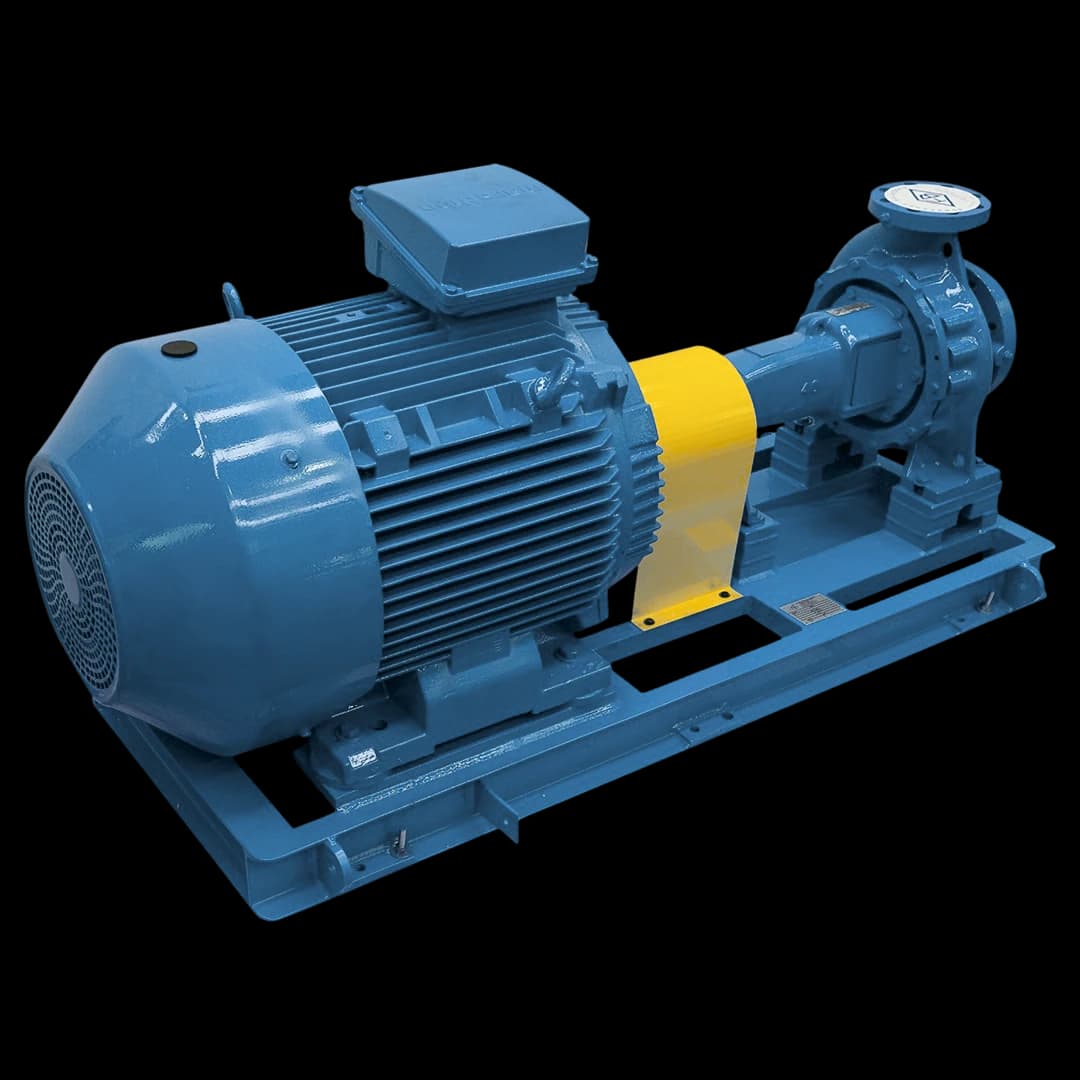
Standardized centrifugal pumps for industrial processes. Compare curves, nozzles and dimensions to select a model.
Explore models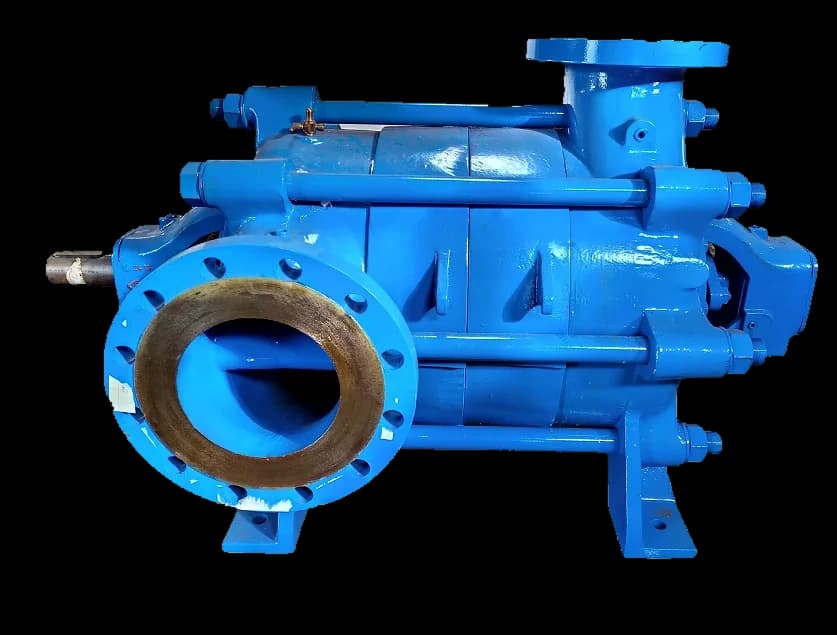
Horizontal construction with multiple stages for pressure elevation. Consult curves, sizes and technical documentation.
Explore models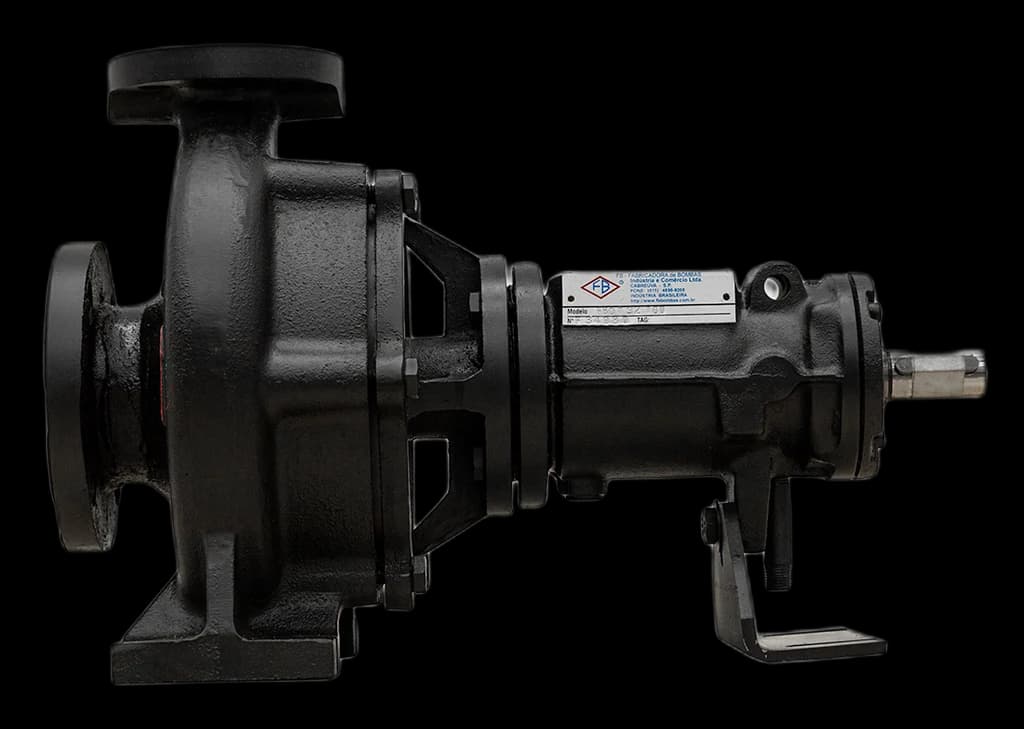
Pumps for thermal oil circulation in industrial heating systems. Consult the series operating conditions.
Explore modelsApplication context and points to confirm during technical and commercial review.
For projects in Loreto, Maranhão, FB Bombas provides service from its factory in Cabreúva, Brazil. Review FBCN for industrial processes, FBME for multistage configurations and FBOT for thermal oil circulation. Selection depends on fluid, flow, head and installation conditions. Check the model curve and documentation with the team.
Describe your plant activity and the pump’s role in the process: transfer, circulation or feed. The team combines this information with fluid and installation data to guide the review of product families.
Identify the fluid by its trade name and available composition. Add viscosity at operating temperature, solids content and startup conditions. These data allow materials and sealing to be assessed before the configuration is confirmed.
State whether the requirement is an expansion, new installation or equipment replacement. For replacement, pump identification and its dimensional drawing help check the duty point and existing interfaces.
For centrifugal pumps in Loreto, check the model curve at the proposed speed and impeller diameter. Flow and head duty, suction conditions, fluid and installation interfaces need to be reviewed together before confirming the equipment.
The project location in Loreto does not determine the pump series. Compare families by fluid and process, then confirm selection using flow, pressure or head, temperature, viscosity and installation conditions.
Support for Loreto starts through the factory channels in Cabreúva, Brazil. Have the equipment identification and a description of operating conditions ready to support maintenance, spare-parts or replacement review.
For economic context, IBGE records GDP of R$ 391 million for Loreto in 2023. In the 2021 gross value added breakdown, industry accounts for approximately 3.2% and agriculture for approximately 67.8%. Reference years differ because the 2022–2023 publication does not include a sector breakdown. These data describe the municipality; pumping requirements need to be specified for your plant’s process.
To organize supply for Loreto, state the number of pumps and each assembly’s role in the plant. Identify the duty points and operating schedule of each circuit, including the intended conditions for standby equipment.
To describe the industrial application in Loreto, identify the process stage and whether the pump will transfer, circulate or feed another item of equipment. The same plant may have circuits with different fluid, flow, pressure and duty requirements.
If the operation in Loreto uses different fluids, record composition, viscosity, temperature and solids content separately for each circuit. Compatibility with one product does not establish that the pump will serve every other plant process.
Source: IBGE — Municipal GDP and methodologyAbout 1,790 km in a straight line between the factory in Cabreúva, São Paulo, and the geographic center of the municipality (IBGE centroid). It is not a road route, freight cost or lead time.
Haversine formula, treating the Earth as a sphere with a radius of 6,371 km, between the factory’s reference coordinates (Av. Adolpho João Traldi, 80 - Jacaré, Cabreúva-SP) and the municipal centroid published by IBGE in its Geographic Mesh API, retrieved on September 24, 2026. The centroid is a reference point of the municipal territory, not the municipal seat or the delivery location. The result is rounded to multiples of 5 km; below 20 km, only “less than 20 km” is shown.
IBGE Mesh API documentationThe project destination in Loreto should be included in the quotation with the delivery address and access conditions. Route and transit time are confirmed for the cargo and selected carrier; distance between cities does not replace that planning.
Service for Loreto starts through the factory channels in Cabreúva, Brazil. Describe the need and equipment. Site visits, commissioning or field service depend on scope review, scheduling and commercial conditions.
To review the FBCN / FBME / FBOT families for the project in Loreto, send the fluid and any known flow, pressure or head and temperature data. For replacement, add the installed pump’s identification and drawing. The team confirms the configuration and proposal scope.
Review process criteria and prepare the information for equipment selection.
Centrifugal pump selection for raw water intake, treated water pumping, boosters, lift stations and water and wastewater treatment processes: fluid and solids, materials, sealing arrangements, NPSH and the documented limits of the FBCN line — and where the right technology is a different one.
View applicationPump selection for acids, caustic bases, organic solvents, polymers, intermediates and pharmaceutical plant utilities — criteria for material, sealing, classified areas and the boundary between chemical service and sanitary product contact.
View applicationChilled water, condenser water, transfer and boosting have different demands. Organise thermal load, flow, head, water quality and controls to assess FBCN against actual building conditions.
View applicationHow to select the boiler feed water pump (feed and condensate return) and the hot water pump for cooling towers, building HVAC, sanitary hot water and solar heating: the three limits that must be checked separately — the pump, the sealing and the system NPSH — and what the FBCN and FBME series manuals document for each.
View applicationShare what you already know. Additional details can be clarified with the team during review.
What needs to be pumped, where it comes from and where it needs to go.
Flow, pressure or head, temperature and operating schedule, when known.
Series, model, identification and space or connection constraints, if a pump is already installed.
Project location, requested scope and documents required for your purchase.

FB Bombas is a Brazilian manufacturer with a history dating back to 1944. Our factory in Cabreúva, São Paulo, brings together CNC machining, assembly and a hydraulic test bench. The team reviews your application and confirms the configuration, documents and supply conditions in the proposal.
About FB BombasUse the family documentation and application guides to prepare your request.
Installation, operation and maintenance by series, with the document language identified.
Understand the process information needed to specify the equipment.
View applicationsSee the other pages for this city and for other cities. Service is provided by the factory in Cabreúva, Brazil.
Information to help you prepare your inquiry to FB Bombas.
Warranty conditions are defined in the proposal and contract and vary with the series, operating conditions and agreement. The manuals state what can void it. Under the FBEI manual (MAN001-10), operating with a different fluid or outside the pump’s data sheets and certified documents without FB’s written authorization voids the warranty. Under the FBME service manual (MSERV-08/01), after parts are replaced, the operating and performance warranty applies only with original parts and FB’s consent. For the project in Loreto, confirm the conditions in the quotation.
No: manual MTEC-03/00 states mechanical construction per ASME B73.1, not dimensional compliance with that standard. So, before a replacement in Loreto, interchangeability with the existing pump is checked on each model’s drawing, together with the duty point, materials and drive.
It depends on the model and the duty point; there is no single efficiency figure for the brand. The FBCN and FBME characteristic curves show the efficiency of each model and, for stainless-steel impellers with passages up to 15 mm, the FBCN manual deducts 2 or 3 points from the curve efficiency (Table 4). For the project in Loreto, compare the absorbed power at the process flow, head and fluid, also considering drive, control and operating duty.
It depends on the series. On the FBCN and FBOT, back pull-out construction allows the bearing-housing assembly to be removed without disconnecting the piping, and the FBEI catalogue also indicates back pull-out construction. The FBE external gear pump is not back pull-out: its shafts are supported on bushings. Before working on the equipment in Loreto, check the series manual, the sectional drawing and the parts list.
It depends on the series. The FBE can have packing, a mechanical seal, a lip seal or a magnetic coupling; the standard seal is type 21, in ceramic, graphite and Viton, with an AISI 304 stainless-steel spring. The FBCN uses packing or a mechanical seal, the FBOT combines graphite packing as the first sealing stage with a mechanical seal immersed in the bearing-housing oil, and the FBEI accepts packing or a single, double or cartridge mechanical seal. State the fluid, concentration, temperature and pressure of the process in Loreto to define the arrangement.
With the pump and part identification. State the pump model and identification, the part as shown in the parts list of the series manual, the urgency and the destination in Loreto; the team checks availability and confirms service and transport options. There is no published universal parts lead time or automatic guarantee of consignment stock. To reduce downtime, the FBEI (MAN001-10) and FBME (MSERV-08/01) manuals include the list of spare parts for two years of operation.
When the Data Book is part of the purchase scope. State which drawings, manuals, certificates and test reports are required for Loreto; the proposal confirms the documents applicable to the supplied series and configuration. The same Data Book is not assumed for every pump.
It depends on the series. The published limits are up to 260 °C for the FBCN, 350 °C for the FBOT, 340 °C for the FBEI and 140 °C for the FBME. For the FBE, the 2026 catalogue gives a range of 10 °C to 500 °C; the limit of each configuration depends on materials and sealing. These are series limits: they do not automatically apply to every model, nor do they necessarily occur together with the other maximums. State the start-up, operating and cleaning temperatures of the process in Loreto.
Lead time to Loreto depends on the model, configuration and transport. Several FBE models are kept in stock; availability and expected dispatch for each item are confirmed in the quotation. State the destination and the date you need so that the proposal also defines freight and delivery responsibilities.
Use the website form, WhatsApp +55 11 97287-4837 or comercial@fbbombas.com.br. Describe the project in Loreto, fluid and technical data you already have. The team reviews the application, clarifies missing information and confirms the configuration and proposal conditions.
Send your application to our factory team. You do not need every parameter defined to start the conversation.
The team reviews the information and confirms the details needed for a proposal. Configuration, availability, documentation, transport and lead time depend on the requested scope.
Describe the fluid, application and project destination. Include the model and technical data you already have.