1. Mandatory components of a fire fighting system
A fire fighting pump system, per NFPA 20 and NBR 16704, consists of main and auxiliary components working together to ensure water pressure and flow at the moment of emergency.
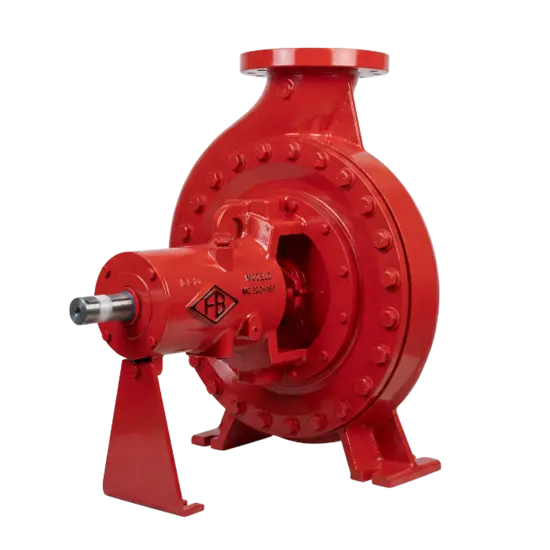
- Main pump — horizontal centrifugal (FBCN series) or vertical, sized for design flow and pressure. Driven by electric motor or diesel engine.
- Jockey pump — pressure maintenance, ~1% of main flow. Maintains static pressure and prevents unnecessary main pump starts.
- Control panel — automation with pressure switches, protection relays, visual/audible signaling, direct start or soft-starter, and interface for building management system (BMS).
- Valves — check (prevents backflow), gate (isolation for maintenance), relief (overpressure protection).
- Instrumentation — pressure gauges, high and low pressure switches, flow meters, reservoir level sensors.
2. The 3 system configurations — electric, diesel and redundant
FB Bombas supplies three standardized configurations serving from small buildings to high-risk industrial plants:
| Configuration | Components | Typical application |
|---|---|---|
| Electric | Electric main pump + jockey + panel | Buildings with reliable power, shopping centers, hospitals with generator |
| Diesel | Diesel main pump + electric jockey + panel | Remote industrial plants, areas without reliable power |
| Electric + Diesel (redundant) | Electric main + diesel backup + jockey + panel | Refineries, petrochemical, NFPA special hazard |
3. Applicable standards: NFPA 20 and NBR 16704
NFPA 20 (Standard for the Installation of Stationary Pumps for Fire Protection) is the international reference standard for design, installation, operation and testing of stationary fire pumps. It defines requirements for main pump, jockey, diesel engine, control panel and acceptance testing.
In Brazil, NBR 16704 (Installation of stationary pumps for fire protection) adapts NFPA 20 requirements to the national context. Other complementary standards: NBR 10897 (sprinklers), NBR 13714 (hydrants and hose systems) and state Fire Department standards.
4. How to size the system — required data
Fire fighting system sizing starts from the building or plant risk analysis, which determines the occupancy class (light, ordinary or extra), protection type (sprinklers, hydrants or both) and water demand (flow and pressure).
- Design flow — defined by standard per risk class and coverage area (e.g., ordinary hazard II = 0.20 GPM/ft² over 1,500 ft²)
- Design pressure — residual pressure at most remote sprinkler or hydrant + piping friction losses + elevation difference
- Drive type — electric (induction motor), diesel (automatic start by pressure switch) or redundant
- Site conditions — electrical power availability, pump room space, water source (reservoir, cistern, public supply)
5. FB Bombas integrated skid — ready to install
FB Bombas supplies fire fighting systems as integrated skids: metal base with main pump, jockey, motor (electric and/or diesel), control panel, valves, instrumentation and interconnecting piping. The assembly arrives at the site ready for connection to suction and discharge piping.
Integrated skid advantages: reduced field installation time, hydraulic and electrical tests performed at factory, single manufacturer warranty on entire system, and customized application engineering. Brazilian manufacturer since 1944, with experience in projects for Petrobras, Vale, BASF, CSN and dozens of industrial plants.


